




Special Collections:
Farming and Food Production


This documentary highlights the impact of the FAO Communal Farming Initiative, funded by Norway. It details how FAO, in collaboration with state governments, introduced high-yield seeds and mechanized land preparation for the 2025 rainy season in Borno, Adamawa, and Yobe (BAY) states to address a severe food crisis.
[Subscribe!](http://www.youtube.com/subscription_center?add_user=FAOoftheUN) to FAO's YouTube channel. Follow FAO on social media: [Facebook](https://www.facebook.com/UNFAO), [Instagram](https://instagram.com/fao), [LinkedIn](https://www.linkedin.com/company/fao), [TikTok](https://www.tiktok.com/@fao), [Twitter](http://www.twitter.com/fao/), and [Weibo](https://www.weibo.com/unfao).
© FAO: [www.fao.org](http://www.fao.org) #SDGs #Agenda2030 #GlobalGoals

Theophilus Delali Dumenyo, a Young Forest Champion from Ghana, credits the FAO elearning Academy for significantly enhancing his technical knowledge in forest monitoring and biodiversity conservation. The digital badges he earned strengthened his professional profile, opened opportunities for partnerships with NGOs, and supported his work empowering smallholder farmers.
He highlights the global importance of free, accessible learning for young professionals. Learn more at the FAO website, subscribe on YouTube, or follow FAO on social media: Facebook, Instagram, LinkedIn, TikTok, Twitter, and Weibo.

Peruvian Environmental Engineer and climate activist Lizet Mejía utilized the FAO elearning Academy. Through the AIM4Forests Young Forest Champions programme, she completed courses on forest data and landscape restoration. These strengthened her technical and leadership skills, providing practical tools for ecosystem restoration and community-based conservation in Huascarán National Park.
FAO digital badges boosted Lizet's professional credibility, fostering new collaborations and knowledge sharing. She advocates for these free, multilingual courses, encouraging students and professionals to explore them for collective learning and resilient landscapes.
© FAO. Subscribe. Follow: Facebook, Instagram, LinkedIn, TikTok, Twitter, Weibo.

The FAO Regional Conference is an official forum where Member States address critical food and agriculture challenges. As the primary regional governing body, it ensures FAO's effectiveness, promotes regional policy coherence, and defines biennial work priorities.
The 39th Regional Conference will facilitate high-level dialogue on progress and challenges in combating hunger and malnutrition in Latin America and the Caribbean. Brazil will host this session, underscoring its strong commitment to regional efforts in this vital area.
More information: https://www.fao.org/events/detail/larc39/es© FAO: http://www.fao.org #SDGs #Agenda2030 #GlobalGoals

The FAO Regional Conference is an official forum where Member States discuss priority food and agriculture challenges, fostering regional coherence on global policy. As FAO's main regional governing body, it ensures the Organization's effectiveness and defines biennial work priorities.
The 39th Regional Conference, hosted by Brazil, provides a high-level platform for technical and political dialogue on progress and challenges in combating hunger and malnutrition across Latin America and the Caribbean. Brazil's hosting underscores its strong commitment to these regional efforts.
For more information, visit https://www.fao.org/events/detail/larc39/en. © FAO: http://www.fao.org #SDGs #Agenda2030 #GlobalGoals

Zebulun Otaigbe Ojo, Head of the IFSA Sub-Commission to FAO, highlights the transformative impact of the FAO elearning Academy. Its free, multilingual, and certified courses provide high-level knowledge in forest management, climate change, and bioeconomy to students worldwide, regardless of location.
Programs like the National Forest Inventory and Institutionalization of Forest Data strengthen technical skills, support research, and enhance career development. The Academy ensures equal access to education, preparing the next generation of leaders for sustainable forest restoration and environmental stewardship.
For more information, visit FAO.org. Subscribe to FAO's YouTube channel and follow them on social media: Facebook, Instagram, LinkedIn, TikTok, Twitter, and Weibo.

AIM4NatuRe, led by FAO and the UK, helps countries meet Kunming-Montreal Global Biodiversity Framework Target 2: restoring 30% of degraded ecosystems by 2030. It works with Brazil, Peru, Kenya, and the Philippines to enhance restoration progress measurement, reporting, and decision-making.
Through the Target 2 Road Map and the Framework for Ecosystem Restoration Monitoring (FERM), AIM4NatuRe aligns national efforts with global reporting and supports diverse ecosystem approaches. In Brazil and Peru, it also backs Indigenous-led, biocentric monitoring, translating commitments into action.
Find more information on AIM4NatuRe and FAO's monitoring efforts. Follow FAO on social media.

The FAO Regional Conference is the official forum where Member States address key food and agriculture challenges. It promotes regional coherence on global policy and serves as the main regional governing body, ensuring FAO's effectiveness and defining biennial priorities.
The 39th Regional Conference will be held in Brazil, demonstrating its strong commitment to regional efforts against hunger and malnutrition. This high-level technical and political dialogue will focus on progress and challenges in Latin America and the Caribbean in combating these issues.
More information: https://www.fao.org/events/detail/larc39/fr © FAO: http://www.fao.org #SDGs #Agenda2030 #GlobalGoals

The FAO Regional Conference is an official forum for Member States to discuss priority food and agriculture challenges, fostering regional coherence on global policy. As FAO's main regional governance body, it ensures the organization's effectiveness and sets biennial priorities.
The 39th Regional Conference will facilitate high-level dialogue on progress and challenges in Latin America and the Caribbean concerning hunger and malnutrition. Brazil will host this session, a decision made at the 38th Session, recognizing its strong commitment to regional efforts against these issues.
For more information: https://www.fao.org/events/detail/larc39/pt. © FAO: http://www.fao.org #SDGs #Agenda2030 #GlobalGoals

Without urgent interventions to rebuild agrifood systems, the Gaza Strip faces an imminent risk of famine in the coming months.
Reactivating local food production is the only path to reverse acute food insecurity and reduce reliance on external aid. #AgricultureCan

Avian influenza (AI) is a major global challenge, posing increased pandemic risks due to its spread and zoonotic infections. A One Health approach, with strengthened preparedness, enhanced surveillance, and coordinated action, is essential.
This second GF-TADs webinar highlights the latest initiatives from FAO, WOAH, and OFFLU, including the FAO/WOAH Global HPAI Strategy and outcomes from the FAO Global Dialogue on HPAI in Brazil. These practical tools and guidance aim to help countries mitigate AI threats. More information: GF-TADs event page.
Subscribe to FAO on YouTube. Follow FAO: Facebook, Instagram, LinkedIn, TikTok, Twitter, Weibo. © FAO.

Agrifood robotics and automation are rapidly advancing, bringing both opportunities and critical questions about costs, impact, and long-term viability. Our global E-Dialogue explored these issues, moving beyond technology demonstrations to focus on governance, finance, and evidence – key factors determining whether automation delivers real sustainability gains or creates new lock-ins.
Watch the forward-looking expert panel discussion connecting innovation, investment, and impact. For more information, visit agtivate.org. Subscribe to FAO on YouTube and follow us on social media: Facebook, Instagram, LinkedIn, TikTok, Twitter, Weibo. © FAO: fao.org #SDGs #Agenda2030 #GlobalGoals
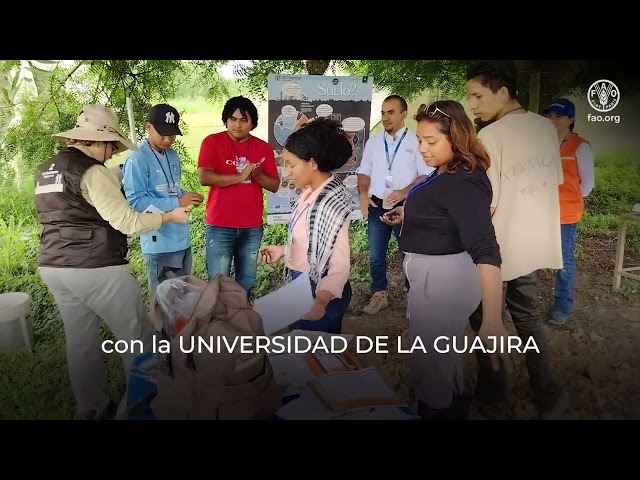
The FAO Global Soil Doctors Programme and its Global Soil Partnership (GSP) will launch in Colombia in 2025. Supported by the World Banana Forum (WBF) and funded by Kaufland, the program involves AGROSAVIA, the Ministry of Agriculture, and other key partners. Through practical producer-to-producer training, it aims to empower small banana and plantain farmers to combat soil degradation, improve sustainable management, and enhance productivity and rural livelihoods.
Subscribe to FAO on YouTube and follow on social media: Facebook, Instagram, LinkedIn, TikTok, Twitter, and Weibo. © FAO: fao.org #SDGs #Agenda2030 #GlobalGoals

The 39th FAO Regional Conference for Latin America and the Caribbean (LARC39) will convene in Brasília from March 2-6, 2026. This event will foster dialogue and decision-making on food, agriculture, and sustainable development, focusing on four regional priorities: Better production, nutrition, environment, and a better life.
Heads of State, ministers, international organizations, civil society, the private sector, academia, and financial institutions will participate, consolidating this as a key platform to combat hunger and malnutrition. Stay connected: Subscribe to FAO's YouTube channel, follow us on Facebook, Instagram, LinkedIn, TikTok, Twitter, and Weibo. Learn more at fao.org.

The 39th FAO Regional Conference for Latin America and the Caribbean (LARC39) will convene in Brasília from March 2-6, 2026. This event will drive dialogue and decisions on food, agriculture, and sustainable development, focusing on more efficient, inclusive, and resilient agrifood systems.
The conference addresses four Regional Priorities: Better Production, Better Nutrition, Better Environment, and A Better Life. Participants, including Heads of State and ministers, will strengthen this platform to combat hunger and malnutrition in the region.
An introductory video is available. Follow FAO on social media for updates: YouTube | Facebook | Instagram | LinkedIn | TikTok | Twitter | Weibo. More at FAO.org.

The 39th FAO Regional Conference (LARC39) will convene in Brasilia from March 2-6, 2026, bringing together Latin American and Caribbean countries. It aims to drive dialogue and decisions on food, agriculture, and sustainable development, focusing on more efficient, inclusive, and resilient agri-food systems. The conference will address four regional priorities: better production, nutrition, environment, and life.
Heads of State, ministers, international organizations, civil society, and the private sector will participate, consolidating efforts to combat hunger and malnutrition in the region. For more information, visit http://www.fao.org. Follow FAO on social media for updates.
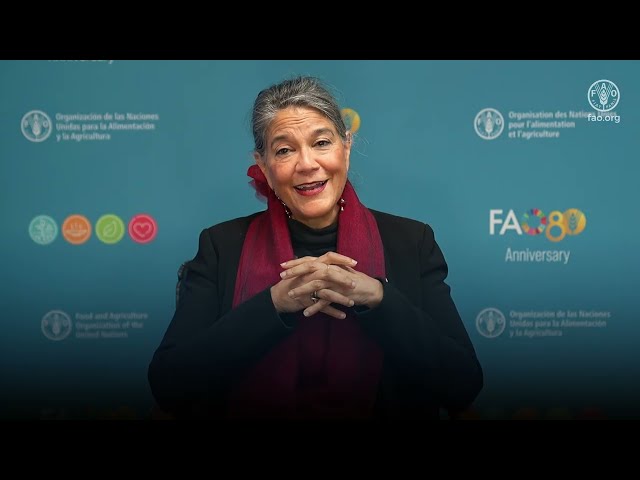
As part of FAO's 80th Anniversary, former Assistant Regional Representative Eve Crowley reflects on the Organization's evolution and key food and agriculture challenges in Latin America and the Caribbean. This interview, part of a special series, highlights milestones that shaped a more integrated, field-oriented, and results-driven FAO.
Crowley discusses critical themes like food access, agrifood systems transformation, and climate change. She also addresses the COVID-19 pandemic's impact on food security, the shift to agile work, and FAO's commitment to underserved communities, including Indigenous Peoples, rural women, and small-scale producers, underscoring the region's leadership toward zero hunger.
Subscribe! YouTube
Follow FAO on social media!
© FAO: fao.org #SDGs #Agenda2030 #GlobalGoals

On FAO's 80th Anniversary, Eve Crowley, former Deputy Regional Representative for Latin America and the Caribbean, reflects on the organization's evolution and the region's key food and agriculture challenges. Her interview addresses critical areas: food access, agrifood system transformation, climate change, and digital innovation. Crowley also details how COVID-19 fostered agile, virtual work, ensuring food security and real-time policy support.
The discussion underscores FAO's commitment to marginalized communities—indigenous peoples, rural women, and small producers—and its regional drive towards zero hunger. This interview is part of a series commemorating FAO's eight decades. For more, visit fao.org. Subscribe: YouTube. Follow FAO: Facebook, Instagram, LinkedIn, TikTok, Twitter, Weibo.

Germán Rojas, former FAO Information Officer, reflects on the strategic role of communications throughout FAO's 80-year history. He details the evolution from analog methods—like print and press relations—to digital technologies, and the challenges of coordinating communications in a decentralized, transforming organization.
Communications proved vital in supporting food security policies, major global hunger conferences, and establishing World Food Day. Rojas's insights show how FAO enhanced its public visibility, advocacy, and collective work against hunger, rural development, and international cooperation.
Subscribe! http://www.youtube.com/subscription_center?add_user=FAOoftheUN
Follow FAO on social media!
* Facebook
* Instagram
* LinkedIn
* TikTok
* Twitter
* Weibo
© FAO

The Forestry Commission for Latin America and the Caribbean (COFLAC) advises the FAO on the region's forestry program. Its mandate, shaped by national and regional priorities and international agreements, includes formulating policies for sustainable forest and wildlife management. COFLAC also coordinates implementation, promotes information exchange, and offers technical advice and recommendations through its subsidiary bodies.
Stay connected with FAO: Subscribe to our YouTube channel and follow us on Facebook, Instagram, LinkedIn, TikTok, Twitter, and Weibo.
© FAO: www.fao.org #SDGs #Agenda2030 #GlobalGoals
Environmental Scientist and Advocate
What EarthSayers stands for
Discover Diverse Voices on EarthSayers
Unlike algorithm-driven platforms that push you into a content bubble, we ensure you hear a variety of perspectives from scientists, activists, Indigenous leaders, business innovators, and everyday citizens working toward sustainability.
EarthSayers CINEMA
Watch, learn and lead—sustainability starts with you.
The Thinking Game | Full documentary | Tribeca Film Festival official selection
“The Thinking Game” is the inside story of DeepMind's groundbreaking AI research, culminating in the Nobel Prize-winning AlphaFold breakthrough. Filmed over five years by the award-winning team behind "AlphaGo," this documentary explores co-founder Demis Hassabis's lifelong pursuit of artificial general intelligence and the rigorous scientific journey from mastering strategy games to solving the 50-year-old protein folding problem.
Following its world premiere at the Tribeca Festival, "The Thinking Game" is now available to watch for free. For those interested in hosting a screening for a classroom, community, or workplace, visit: rocofilms.com/films/the-thinking-game/.


