



Special Collections:
Transforming Our Economy

Anna Rosling Rönnlund's project explores daily life globally, from brushing teeth in Sweden to making beds in Rwanda. She sent photographers to 264 homes in 50 countries, documenting items like stoves, beds, and toys across all income levels.
This initiative uses data visualization to reveal diverse living conditions worldwide. Rosling Rönnlund demonstrates how families live, from Latvia to Peru, fostering a better understanding of our interconnected world.
Find more TED Talks here.

Richard Wilkinson and Kate Pickett's *The Spirit Level* demonstrated how less equal societies perform worse across various social measures, including health, education, and wellbeing. This work significantly heightened public awareness of inequality's impacts.
Their subsequent book, *The Inner Level*, argues that societies built on fundamental equality, sharing, and reciprocity foster greater wellbeing. It contrasts these with societies driven by excessive individualism and aggression, offering new perspectives on how we should organize our collective lives.

In her TEDxSantaCruz speech, Dr. Riane Eisler proposes four actions to transform economics. A distinguished social scientist, attorney, and author, Dr. Eisler's work on cultural transformation has influenced fields from history to education.
As President of the Center for Partnership Studies, she champions peace, sustainability, and economic equity. Her pioneering human rights work expanded international focus to include women and children. Dr. Eisler's book, *The Real Wealth of Nations: Creating a Caring Economics*, advocates for an economic model that values caring for people and nature.

Consumers bear responsibility for the entire product lifecycle, from resource extraction and manufacturing to eventual disposal. Despite holding admirable sustainability values, our purchasing behaviors often fail to align, impeding progress in environmental, social, and economic sustainability. Individual actions form the foundation for meaningful change.
For more insights, see Part One: https://www.youtube.com/watch?v=2TFWbpgCFjg
By Kat McDearis and Eric Pappas. Copyright 2015.

Environmental and economic problems like low wages and unemployment are often blamed on a hard-to-regulate U.S. economy. However, this system is intentionally rigged for the wealthy. Laws and policies overwhelmingly favor them, allowing control of vast resources and lavish living, while most Americans struggle paycheck to paycheck.
Despite ample resources, our economic system is designed for the wealthy, who manipulate it via political influence. It could easily be regulated to ensure decent jobs, healthcare, and homes for all. Yet, we largely complain without taking action.
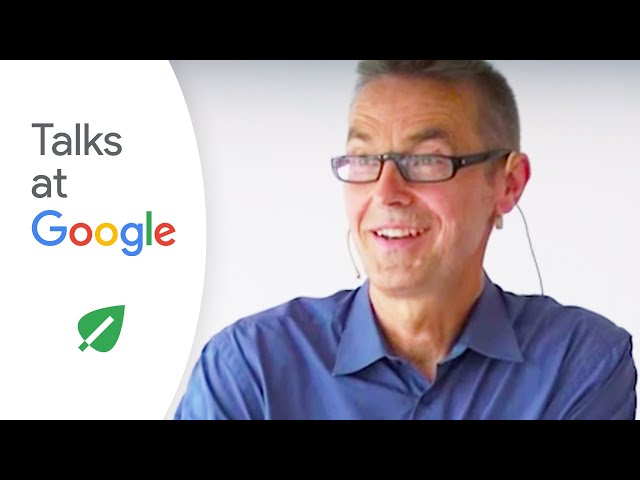
Published on August 29, 2016, by Google Talks, this features Otto Scharmer. He is a Senior Lecturer at MIT, co-founder of the Presencing Institute and the Global Wellbeing Lab, and chairs the MIT IDEAS program.
Scharmer introduced the concept of "presencing"—learning from the emerging future—in his bestselling books *Theory U* and *Presence*.
To order his book, *Theory U*, visit Amazon or your local bookstore.

Economist and writer Christian Felber presents his "Economy for the Common Good" initiative. He explores whether businesses can achieve both endless growth and be fair and sustainable, and if an economic model untainted by our current financial system is possible. Learn more about Felber's work and his book Felber Book on Common Good.
Launched in 2010, the 'Economy for the Common Good' is now supported by over 2000 businesses across 40 countries. It aims to create systemic change by awarding legal benefit points to socially responsible companies, encouraging their pursuit of the common good. Felber demonstrates how this shift can be achieved, and his book "Change Everything" is available for purchase.
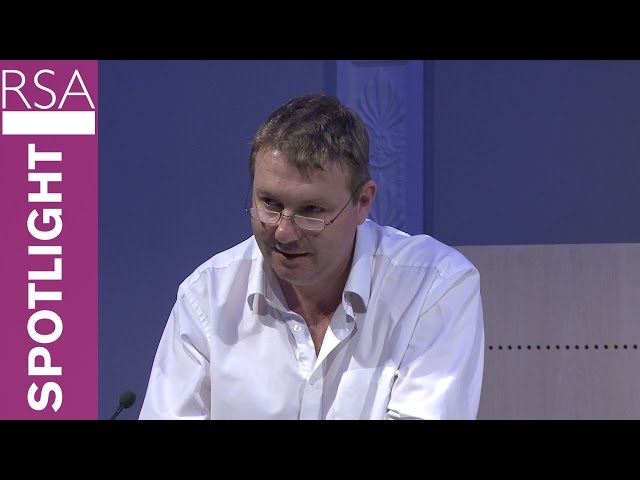
The RSA presented "The Inequality Debate" with Danny Dorling. This discussion explores whether London's economic success justifies growing inequality, and if the city can maintain economic efficiency amidst such disparities.
Watch Professor Dorling, from the University of Oxford, in the latest RSA Spotlight – an edited highlight of the event. For the full replay, click here.

Sabbath Economics is an economic practice rooted in the belief that there are sufficient resources for all. It recognizes our fundamental role as economic beings interacting with creation's resources for survival and flourishing.
A key tenet is debt forgiveness, viewed as biblical, just, and healing. This approach aims to narrow the divide between the wealthy and the poor.
Explore Sabbath Economics further at sabbatheconomics.org. Additional insights are available in these clips: Clip 2 and Clip 3.

Streamed live on May 19, 2016, Rachel Botsman visited the RSA to discuss the rapidly growing sharing economy, popularized by platforms like Airbnb and Uber. She addressed its "growing pains," exploring how to unlock its full social potential and ensure it empowers, not exploits. Botsman examined the sector's future, including new ventures, the importance of diversity, and critical issues such as monopolization, provider power, and the future of work.
A six-minute version of this discussion is available here. Follow RSA Events on Twitter, Facebook, SoundCloud for podcasts, and Instagram for behind-the-scenes.

Capitalism is often seen as a dual force: a driver of prosperity that has lifted billions from poverty, yet also a system that can foster greed. Both views contain truth.
While free enterprise promotes global prosperity, we must guard against materialism, remembering that money serves as a means to greater ends. Join Arthur Brooks—New York Times columnist, bestselling author, and president of the American Enterprise Institute—for this thought-provoking discussion.

Joss Tantram, co-founder and Partner at Terrafiniti/TOWARDS 9 BILLION, explains the critical importance of understanding ecosystem value and the significant cost of their destruction.
His insights were presented at the Salzburg Global session, "A Climate for Change: New Thinking on Governance for Sustainability," in June 2013. This discussion was originally published on September 17, 2013.

Richard D. Wolff's YouTube channel features programs that begin with 30-minute updates on recent economic events. This is followed by Wolff's analysis of major economic issues.
Topics covered have included Americans' falling household wealth, the global debt bubble, large US companies evading taxes via offshore havens, and corporate scandals such as GM's vehicle recalls.
Explore more on Professor Wolff's website. His book, Democracy At Work, is available for purchase.

Episode #8 of Meeting of the Minds features futurists Gerd Leonhard and Ross Dawson. They discuss the future of sustainability, the circular economy, and the triple bottom line.
The conversation explores lateral growth as the sole viable option and the necessity of changing industrial-based metrics.
This episode was published on February 17, 2014.

The World Business Council for Sustainable Development (WBCSD) introduces its groundbreaking Action2020 plan. This science-based initiative sets a new agenda for business action on sustainable development, addressing the planet's most urgent needs.
Launched at the WBCSD's Council meeting in Istanbul in November 2013, the accompanying video features insights from prominent WBCSD members. These include CEOs like Mike Mack (Syngenta), Paul Polman (Unilever), Atsutoshi Nishida (Toshiba), John Alexander (ERM), and Henrik Madsen (DNV).

At the World Economic Forum in Davos, Dr. Jim Yong Kim, 12th President of the World Bank Group, highlighted income inequality and the urgent need to close the gap between rich and poor. He stressed that a serious plan is essential to address this global challenge.
The World Bank offers a smart plan of action. Watch their video from Davos, published on January 23, 2014, to hear their recommendations.

This animation explores a post-consumer society, envisioning a future with fewer work hours, increased re-skilling, homesteading, and small-scale enterprises. These shifts aim to reduce the consumer economy's overall size and impact. It is narrated by economist and best-selling author Juliet Schor and produced by The Center for the New American Dream.
Dr. Schor's book, *Plenitude*, delves deeper into these concepts. You can order it from Amazon or find it at your local bookstore.

On June 9th, at the Strategies for a New Economy 2012 Conference, a historian and political economist discussed the urgent need for new institutions. He argued that the current system is politically stalemated, economically stagnant, and decaying, despite managing the wealthiest nation.
He emphasized that public awareness of these systemic failures creates an opportunity for fundamental rethinking. As an example, he cited the Cleveland experience, which successfully integrated profits into the community, supported by existing purchasing institutions.

Gar Alperovitz, a political economy professor at the University of Maryland and co-founder of the Democracy Collaborative, delivered the Green Party convention's keynote address, aired by Democracy Now. Emphasizing "we," Alperovitz stressed the importance of third-party politics to challenge a corporate-run society.
Author of "America Beyond Capitalism: Reclaiming Our Wealth, Our Liberty, and Our Democracy," he argued that systems are defined by wealth control. He highlighted that "the top 400 people own more wealth now than the bottom 185 million Americans taken together," calling it a "medieval structure."

Many believe our economic model is broken. Pioneers like Maurice Strong, Bjorn Stigson, Matthew Kiernan, and Jonathon Porritt advocate challenging current orthodoxies. They envision a transition from an economically-driven framework to one founded on ecological infrastructure.
This perspective is featured in one of twenty Ray Anderson Memorial Interviews. These interviews are part of The Regeneration Project, a joint initiative by Sustainability and GlobeScan.
Environmental Scientist and Advocate
What EarthSayers stands for
Discover Diverse Voices on EarthSayers
Unlike algorithm-driven platforms that push you into a content bubble, we ensure you hear a variety of perspectives from scientists, activists, Indigenous leaders, business innovators, and everyday citizens working toward sustainability.
EarthSayers CINEMA
Watch, learn and lead—sustainability starts with you.
The Thinking Game | Full documentary | Tribeca Film Festival official selection
“The Thinking Game” is the inside story of DeepMind's groundbreaking AI research, culminating in the Nobel Prize-winning AlphaFold breakthrough. Filmed over five years by the award-winning team behind "AlphaGo," this documentary explores co-founder Demis Hassabis's lifelong pursuit of artificial general intelligence and the rigorous scientific journey from mastering strategy games to solving the 50-year-old protein folding problem.
Following its world premiere at the Tribeca Festival, "The Thinking Game" is now available to watch for free. For those interested in hosting a screening for a classroom, community, or workplace, visit: rocofilms.com/films/the-thinking-game/.


