




Special Collections:
The Circular Economy


Plastic offset is an emerging environmental paradigm designed to combat global plastic pollution. It aims to fund underfunded waste management social enterprises in the developing world, which offer ethical solutions but struggle to scale.
Inspired by carbon credits, plastic offset provides a transformative funding mechanism to accelerate a circular economy. Achieving meaningful impact is challenging, given the complex interplay of consumer responsibility and producer accountability, but entirely possible.
This initiative will explore local needs and global systems governing waste, from Mumbai to New York.

The built environment consumes half the world's materials, with global construction projected to add Paris-sized floor space weekly by 2060. This necessitates the industry's urgent adoption of circular principles on a large scale.
This session, livestreamed via Restream.io and featuring experts from Arup and GXN Innovation, will explore how to implement these principles and present a compelling business case to drive industry action.
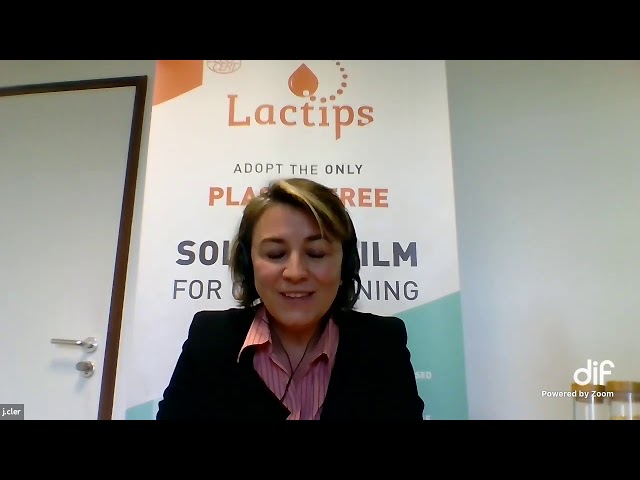
Five years ago, Lactips pioneered the world's first environmentally friendly plastic, crafted from industrial casein and natural additives. This 100% biosourced, biodegradable material boasts specialty plastic properties, including gas barrier, water solubility, and edibility.
Its unique, patented technology offers a significant opportunity to transform non-biodegradable flexible packaging and substitute single-use plastics in detergency, food, and building applications.
Explore Lactips' journey, scalability, and challenges with founder Marie-Hélène Gramatikoff. Watch the session here.

The Los Angeles fashion industry is substantial, comprising over 11,000 businesses and 38,000 employees. Mayor Garcetti's Green New Deal (GND), an update to the city's 2015 Sustainability pLAn, aims for zero waste and net zero carbon emissions by 2050. The GND specifically mandates engaging the textile and apparel industry to implement zero-waste manufacturing strategies and divert unwanted garments from landfills.
This session will explore current city-level initiatives and how LA-based brands and manufacturers are adopting zero-waste strategies and operating within a circular economy framework.


Less than 1% of clothing is recycled, leading to a truckload of textile waste entering landfills every second. However, some designers and brands are challenging this linear "take-make-waste" model by embracing sustainable practices.
A prime example is Rapanui, founded by two brothers on the Isle of Wight. They create clothing from natural materials using renewable energy, designing products for circularity. Worn-out items are recovered to make new ones, and t-shirts are produced on-demand to eliminate overproduction. Rapanui also provides a free platform for global access to their supply chain and technology.
Discover more about their ambitious journey to redesign the fashion industry. Multistreaming with Restream.io.

This session, streamed via Restream.io, addresses the pressing environmental impact of takeaway coffee cups, focusing on wastefulness and recyclability challenges. There's growing demand for improved design, reuse, and recycling solutions to combat ocean plastics and other waste concerns.
Join us to learn how DS Smith is tackling this problem. They developed a scalable coffee cup recycling solution for standard paper mills and launched their innovative Coffee Drop Box. We'll also hear from the Head of Environment at a major UK coffee retailer, discussing the challenges of single-use cups and the roles of reuse and recycling in changing consumer habits.


Indonesian reuse businesses present a promising niche market with the potential to disrupt the single-use plastics crisis. Latest infographics showcase their development on Java and the significant potential for accelerating this movement.
Three remarkable entrepreneurs are leading the charge with innovative circular business models. Kecipir offers an e-commerce platform for fresh produce delivered through a reusable system. Muuse provides a seamless deposit system for reusable cups and containers, powered by a mobile app and smart return stations. Zero Waste Warung implements a blockchain-inspired refill system using reusable sachets across a network of local warungs.
Meet these innovators and engage in a live discussion on strategies needed to rapidly scale and accelerate reuse businesses.

In an age where governments and businesses hold vast amounts of our data, protecting privacy and ensuring democratic information use is paramount. Cities, home to over half the global population and centers of innovation, are crucial for developing new technologies and business models.
However, truly "smart cities" depend on "smart citizens." This requires guaranteeing access to opportunities that develop critical skills for interacting with new technologies.
Join Mara Balestrini, CEO of Ideas for Change, to explore how citizens can harness their city's data to address local problems.
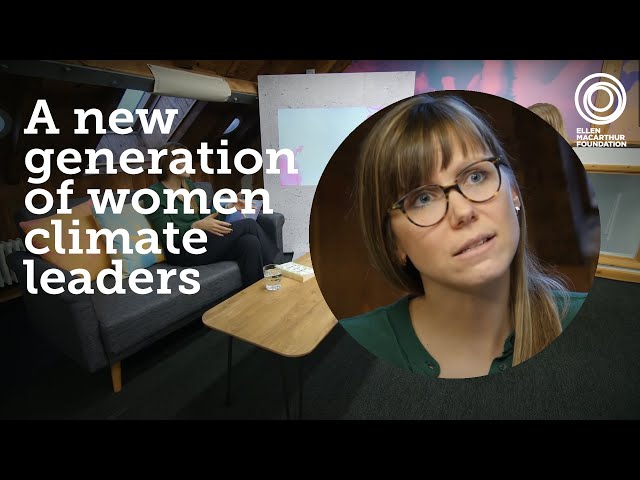
C40's Women4Climate initiative empowers women to lead climate action. Through a global mentorship program and leadership events in C40 cities, it aims to foster new thinking and momentum among future leaders.
Women, who comprise over half the world's population, are often disproportionately impacted by climate change but lack representation in decision-making. Enhancing their participation and leadership is crucial for a healthy, prosperous, and sustainable future for all.
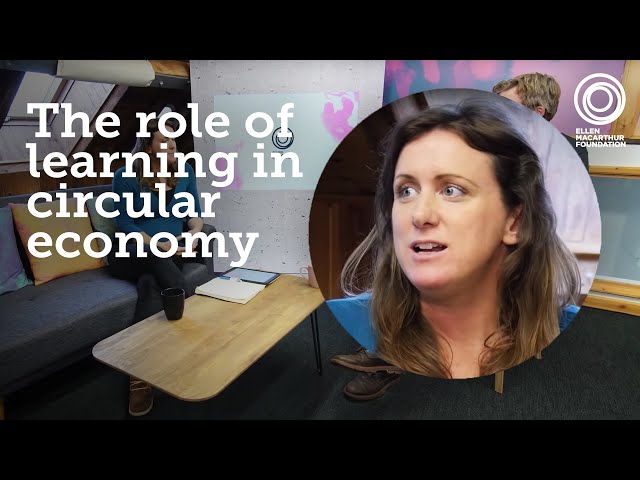
Our thinking, shaped by learning, influences the world. Adopting a circular economy demands a learning journey, new practices, and a significant mindset shift.
The Ellen MacArthur Foundation supports this transition. Our Learning Team works across schools, universities, businesses, and informal settings to foster new mindsets. Tune in to learn more about our work and its impact.

Human population and demands are rapidly growing, straining our finite resources. By 2050, feeding 10 billion people will require more land, farmers, and energy. The critical challenge is achieving this while regenerating our already degraded planet.
Discover how regenerative agroforestry offers a vital solution. This agricultural system mimics nature, preserving forests, mitigating climate change, and restoring planetary health.
Join Felipe Villela, founder of reNature, and Patrick Worms from the World Agroforestry Centre, to learn more.

Forest Gardens offer an abundant, beautiful, and climate-resistant way to grow food sustainably. This ancient knowledge, revived for modern use, requires no digging, unnatural additions, or extensive weeding and watering. Primarily perennial, these gardens eliminate the need for annual seeding, providing continuous produce with minimal effort.
The National Forest Gardening Scheme promotes harmony and well-being through planting and enjoying these unique gardens. To make them accessible, the scheme is launching a "Forest Garden in a Box." This initiative is designed for a wide range of settings, including individual gardeners, window boxes, schools, community gardens, and public parks.

While bio-based materials are crucial for transitioning to a circular economy, their role in fully replacing fossil fuels and curbing emissions isn't a simple solution. Many companies are investing in bio-based supply chains for everyday products like fuel, fiber, chemicals, and plastics.
However, producing biomass often demands significant land and nutrient resources, highlighting the complexities and challenges involved in their widespread adoption.

The circular economy is crucial for tackling climate change, as 45% of global greenhouse gas emissions stem from how we make and use products and produce food.
Per Klevnäs, a managing consultant and economist at Material Economics, brings extensive experience from over 100 international energy, resource, and climate projects since the early 2000s. He advises companies on resource and sustainability strategies, covering investment, low-carbon growth, and regulatory planning.

The fashion and textile industry significantly impacts the environment, contributing 10% of global greenhouse gas emissions. Producing polyester consumes 70 million barrels of oil annually and takes centuries to decompose. Cotton also demands vast resources, using 20,000 liters of water per kilogram, alongside significant land and pesticides.
Discover how to create clothes that can be made again. This session will reveal technological solutions from Aalto University and feature Petar Ostojic, founder of the Latin American Innovation Centre for the Circular Economy (CIEC). He will explain how combining the circular economy and the Fourth Industrial Revolution can address waste, improve living standards, and tackle other challenges across Latin America.

Nature offers elegant solutions to countless design challenges, from advanced adhesives and biodegradable packaging to incredibly strong materials and the mechanics of flight. The study and application of these natural innovations is known as biomimicry.
Join us to hear from two experts in this field. Richard MacCowan of Biomimicry UK will discuss its role in adopting Industry 4.0 technology, while Veronika Kapsali from University of Arts London will share insights on biomimicry in her textiles work.

Digital technology is essential for transitioning to a circular economy. Data and artificial intelligence, in particular, are critical components in this global shift.
This session will explore how these and other digital technologies can be leveraged to accelerate the move towards circularity.

The transition to a circular economy offers an exciting opportunity to redesign roles and create new jobs. However, critical questions remain: How can we ensure these circular jobs are high-quality, inclusive for both high and low-skilled workers, and genuinely better than those in linear sectors? This systemic shift requires careful consideration of public and private sector roles in fostering an equitable labor market.
Circle Economy is dedicated to securing a positive transition for work and workers. Join us as Circle Economy moderates a discussion with experts and the DIF audience to explore these vital questions and more.
Environmental Scientist and Advocate
What EarthSayers stands for
Discover Diverse Voices on EarthSayers
Unlike algorithm-driven platforms that push you into a content bubble, we ensure you hear a variety of perspectives from scientists, activists, Indigenous leaders, business innovators, and everyday citizens working toward sustainability.
EarthSayers CINEMA
Watch, learn and lead—sustainability starts with you.
The Thinking Game | Full documentary | Tribeca Film Festival official selection
“The Thinking Game” is the inside story of DeepMind's groundbreaking AI research, culminating in the Nobel Prize-winning AlphaFold breakthrough. Filmed over five years by the award-winning team behind "AlphaGo," this documentary explores co-founder Demis Hassabis's lifelong pursuit of artificial general intelligence and the rigorous scientific journey from mastering strategy games to solving the 50-year-old protein folding problem.
Following its world premiere at the Tribeca Festival, "The Thinking Game" is now available to watch for free. For those interested in hosting a screening for a classroom, community, or workplace, visit: rocofilms.com/films/the-thinking-game/.


