




Special Collections:
The Future: Our Kids
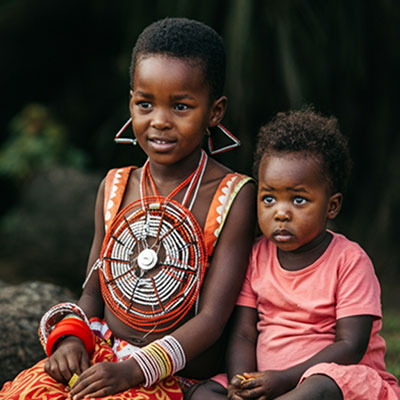

Enbridge's Line 5 pipeline, operating 20 years beyond its engineered lifespan, threatens 20% of the world's surface freshwater in the Great Lakes, along with sacred ecosystems, drinking water, and treaty territories. Indigenous women, tribal leaders, and allies are demanding its immediate shutdown and decommissioning.
Despite strong opposition, Enbridge proposes expanding and re-routing Line 5. This new route would devastate hundreds of waterways, including those vital to the Bad River Reservation, Lake Superior, and the Straits of Mackinac. It is imperative to stop this expansion and all fossil fuel projects now.
Learn more about WECAN's campaign to stop Line 5: wecaninternational.org/stop-line-5
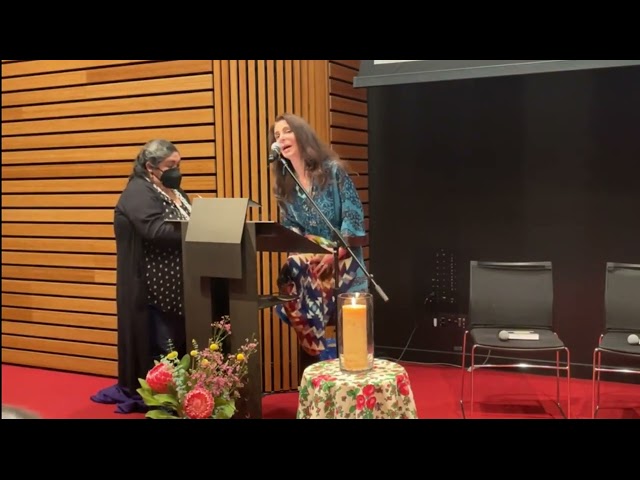
"How Worldviews and Climate Justice Can Remake a World in Crisis" was a fundraiser for Sogorea Te' Land Trust and launched Osprey Orielle Lake's book, "The Story is in Our Bones." The event gathered movement leaders to address humanity's critical choice point: transforming dominant worldviews, which fuel social and ecological crises, into a paradigm of respect, restoration, and justice for an equitable world.
Speakers shared powerful stories demonstrating a possible world, urging solidarity and action. All book proceeds supported Sogorea Te' Land Trust, an Indigenous women-led organization returning land to Indigenous people. Learn more: Book: ospreyoriellelake.earth, Land Trust: sogoreate-landtrust.org, WECAN: wecaninternational.org.

On December 5, WECAN hosted a UN Side Event at COP28, titled "Women Implementing Climate Justice Solutions to Mitigate and Adapt to the Climate Crisis." Grassroots, Indigenous, and frontline women, along with global organization representatives, presented diverse climate justice strategies, including forest protection, Indigenous rights, agro-ecology, and a Just Transition.
The event featured powerful testimonies from diverse women leaders. A special appearance by Sonia Guajajara, Brazil's Minister of Indigenous Peoples, underscored the vital role of women's leadership globally. WECAN is honored to continue its long-standing collaboration with Minister Guajajara.

Women are at the forefront of the global climate crisis. They disproportionately experience its impacts yet are powerful agents of change.
Their leadership is crucial for ending the era of fossil fuels and implementing sustainable solutions worldwide. Empowering women is essential for effective climate action.

During Climate Week in New York City, WECAN held a virtual public event on September 26, 2024, titled “Transforming Global Economies: From Extraction to Regeneration in a Just Transition.”
Global women leaders shared insights on a Just Transition and innovative economic models, including community-led initiatives, feminist economics, Indigenous wisdom, and traditional practices of reciprocity with the Earth. This dynamic discussion highlighted a clear path to a thriving, socially just, and ecologically enriching future for all.
WECAN extends sincere thanks to all the inspiring speakers for their valuable contributions.

On April 18, 2024, Indigenous youth leaders globally convened virtually at the UN Permanent Forum on Indigenous Issues (UNPFII). They presented strategies and solutions to address fossil fuel extraction, deforestation, and the climate crisis.
Utilizing Indigenous knowledge, panelists championed Indigenous rights, self-determination, and climate justice, aiming for a healthy and equitable climate future. The event featured diverse Indigenous youth leaders from regions including Nepal, Turtle Island/USA, Kenya, and Norway.

Indigenous knowledge provides crucial climate solutions. In Oklahoma, amidst extensive fracking, Casey Camp-Horinek (Ponca Nation) and her community, supported by WECAN, are constructing the Earthen Lodge. This project, rooted in Indigenous wisdom, fosters food sovereignty and climate resilience, aiming for seventh-generation survival.
Stewarded by the Pa'tha'ta Women's Society, the Lodge offers safe harbor during climate disasters, space for cultural teachings, and sustainable food and medicine. It addresses decades of oil pollution, supporting community strength against fossil fuel extraction and climate disruption. Learn more about the Earthen Lodge Project: wecaninternational.org/earthen-lodge-project

On September 12, 2024, WECAN launched its "Gendered and Racial Impacts of the Fossil Fuel Industry in North America" report. This fourth edition details how fossil fuel extraction disproportionately harms women, particularly in Black, Brown, Indigenous, and low-income communities, leading to increased health risks, violence, and human rights violations. It also identifies complicit financial institutions and recommends steps for accountability and a just transition.
The virtual launch featured frontline women leaders, health experts, and advocates. Speakers like Roishetta Sibley Ozane, Rene Ann Goodrich, Sharon Lavigne, and Casey Camp Horinek demanded that financial institutions take action to protect communities, ecosystems, and the climate.

Lynn Margulis was a prominent evolutionary theorist, biologist, and science author. She is best known for developing the theory of symbiogenesis and co-developing the Gaia Theory with James Lovelock.
Margulis authored several books, including *Mind, Life, and Universe*, *Dazzle Gradually*, and *Luminous Fish*, some in collaboration with her son, Dorion Sagan. Her work often explored her deep love of nature and fascination with science.
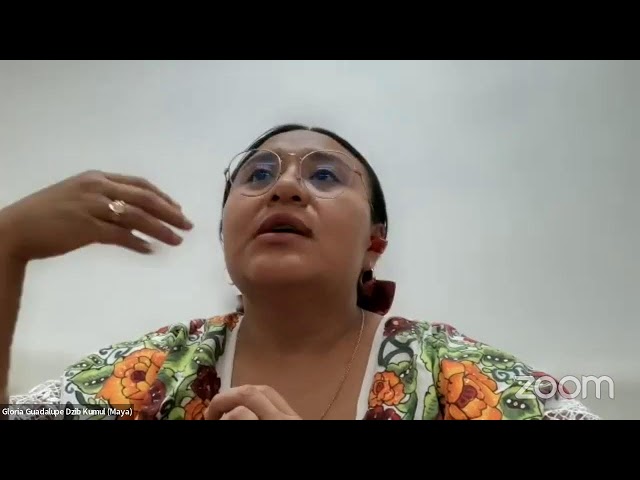
The latest Cultural Survival Quarterly issue celebrates Indigenous educators and youth revitalizing knowledge systems, languages, and lifeways. Indigenous education honors Elders and youth as vital knowledge carriers, fostering their leadership and creativity for thriving communities.
Join the conversation with Indigenous educators, including panelists Aviut Rojas (Nahuat), Eli Wewentxu (Mapuche), Gloria Guadalupe Dzib Kumul (Maya), and Catalina Vergara Realpe (Nasa). Byron Tenesaca Guaman (Kañari Kichwa) will moderate.
Interpretation is available for English and Spanish speakers via tinyurl.com/indiged116.

Nineteen-year-old artist Austin Picinich founded Save Our Salmon through Art (SOS) in 2021. This nonprofit uses public art to educate and empower communities to protect local salmon-spawning streams, many of which are blocked by urban culverts. Picinich was inspired after only three salmon returned to spawn in Juanita Creek near his home.
SOS hosts interactive mural painting events. Picinich designs salmon-themed murals, which volunteers and attendees complete during "SOS Community Days." These events have engaged nearly 750 painters and over 3,000 attendees, raising more than $28,000 for stream restoration and reaching almost a million people through awareness efforts.

Amelia Southern-Uribe, 21, grew up in environmentally vulnerable Southern communities, recognizing early on that environmental justice is linked to the liberation of marginalized groups. In 2019, they founded Arkansas’s first Zero Hour chapter in Fayetteville, which became a model for climate activism across the state.
Addressing Arkansas’s educational disparities, which exacerbate injustice, Southern-Uribe co-founded Roots magazine in 2022. Roots amplifies BIPOC Southern voices and environmental knowledge, providing free art supplies to artists. In its pilot year, over $7,800 was raised to distribute the magazine statewide.

Ishanvi Shetty, a 15-year-old 11th grader from GEMS Modern Academy in Dubai, presents a thought-provoking talk on combating the climate crisis through AI.
An avid public speaker, debater, and philosophy enthusiast, Ishanvi is deeply committed to youth empowerment and environmental advocacy. She actively participates in sustainability initiatives, volunteering, and entrepreneurial ventures, focusing on the intersection of climate change and AI.
This talk was presented at an independently organized TEDx event. Learn more at ted.com/tedx.

Earth Island's New Leaders Initiative hosted a virtual Eco-Anxiety Panel on September 12, 2024. Climate psychologist Leslie Davenport moderated the event, which featured Brower Youth Awards Alumni.
Alumni Rachel Barge, Mackenzie Feldman, and Hamid Torabzadeh shared insights into eco-anxiety, offering coping strategies and discussing ways to overcome its challenges.

Join our "Women in the Workplace" 10-year anniversary panel event, celebrating a decade of progress and the path ahead for women in the workforce. We'll reflect on gains and setbacks across industries, looking forward to new opportunities.
Drawing from the 2024 "Women in the Workplace" report by McKinsey & Company and LeanIn.org, this discussion will analyze real-world data on equitable policies, talent pipelines, equal representation, and pay parity. Our panel, featuring Sukhinder Singh Cassidy (CEO, Xero), Padmasree Warrior (Co-Founder & CEO, Fable), and moderator Alexis Krivkovich (McKinsey & Company), will share authentic experiences from the C-suite to entry-level roles.

Dr. Rim Belhassine-Cherif, Chair of the Network of Women (NoW) in ITU-T, will explain the initiative. She also serves as Chief Innovation and Strategy Officer for Tunisie Télécom, Tunisia.
Her presentation will detail the Network of Women's purpose, mission, and objectives.

"The Influence of Environmental Activism on Gen Z Voting" featured four environmental leaders discussing activism's impact on youth turnout and civic engagement. Part of UC Berkeley's Creating Citizens Speaker Series, this event aimed to inspire future voters and citizen leaders.
The series, a partnership with The Commonwealth Club and others, offers students and community members opportunities to engage with leaders in politics, media, and education. The Commonwealth Club, founded in 1903, is the nation's oldest and largest public affairs forum, hosting over 500 annual events.
Join our Email List! https://www.commonwealthclub.org/email
BECOME a MEMBER: https://www.commonwealthclub.org/membership

Katherine Martínez Medina, 21, grew up on Vieques, Puerto Rico, an island contaminated by decades of US Navy bomb testing. This toxic environment, coupled with high food costs and import reliance, spurred her early environmental activism.
In 2020, Medina joined La Colmena Cimarrona, a women-led agriculture initiative formed post-Hurricane Maria. It seeks food sovereignty, a solidarity economy, and fights displacement in Vieques. As a link between organizations, Medina helps shape the farm's efforts, building hope.
Drone Footage Vieques:
https://www.youtube.com/@thetravelingdrone
https://www.youtube.com/@OneManWolfPack
Additional footage:
https://www.youtube.com/@aljazeeraenglish
https://www.youtube.com/@AssociatedPress

Maanit Goel, 17, from Washington State, learned about the critically endangered Southern Resident orcas. Only 75 remain in the Salish Sea, threatened by declining Chinook salmon, their primary food source, in the Snake River-Columbia River system.
In 2021, Goel founded the Washington Youth Ocean & River Conservation Alliance (WYORCA) to mobilize youth. WYORCA advocates removing four lower Snake River dams, impeding salmon migration and harming orcas. Goel argues renewable energy shouldn't sacrifice a keystone species. With 30 volunteers, WYORCA educated over 6,000 students, held 20+ congressional meetings, and coordinated events. The group earned Congressional recognition and an EPA award; Goel also spoke at the UN Biodiversity Conference (COP15).

After Hurricane Irma flooded Miami in 2017, Will Charouhis founded We Are Forces of Nature, a youth-led climate group. It focuses on providing climate adaptation and mitigation strategies for coastal areas, particularly through mangrove conservation.
The group launched A Million Mangroves, an initiative that cleans, plants, and researches mangroves to improve restoration success. Charouhis, 17, also pioneers research at Miami's Seaquarium on mangrove species resilience to ocean acidification and warming.
He has shared his findings at UN climate conferences, aiming to increase global restoration efforts. His organization has educated 2,500 youth in 16 countries and is involved in collaborative mangrove restoration in Central Africa.
Environmental Scientist and Advocate
What EarthSayers stands for
Discover Diverse Voices on EarthSayers
Unlike algorithm-driven platforms that push you into a content bubble, we ensure you hear a variety of perspectives from scientists, activists, Indigenous leaders, business innovators, and everyday citizens working toward sustainability.
EarthSayers CINEMA
Watch, learn and lead—sustainability starts with you.
The Thinking Game | Full documentary | Tribeca Film Festival official selection
“The Thinking Game” is the inside story of DeepMind's groundbreaking AI research, culminating in the Nobel Prize-winning AlphaFold breakthrough. Filmed over five years by the award-winning team behind "AlphaGo," this documentary explores co-founder Demis Hassabis's lifelong pursuit of artificial general intelligence and the rigorous scientific journey from mastering strategy games to solving the 50-year-old protein folding problem.
Following its world premiere at the Tribeca Festival, "The Thinking Game" is now available to watch for free. For those interested in hosting a screening for a classroom, community, or workplace, visit: rocofilms.com/films/the-thinking-game/.


