




Special Collections:
Life on Earth

Male mason wasps have evolved a unique defense: using spiked genitals to mimic a female's venomous sting. Lacking true stingers, males deter predators like tree frogs by faking one with spines on their reproductive organs. A 2022 study found this strategy 35% effective, compared to females' 87% escape rate with real stingers.
The Center for Biological Diversity is a Tucson-based 501c3 nonprofit. We secure a future for all species, believing human welfare is linked to nature's diversity. Through science, law, and media, we protect vital lands, waters, and climate. Visit our website, follow our socials (Twitter, Facebook, Instagram, TikTok), take action here, or email center@biologicaldiversity.org.

Scientists recently discovered bats, like Tuvan throat singers and death-metal vocalists, produce sound using ventricular folds instead of vocal cords. A Danish biologist found bats use these for low-frequency calls. With their ability to also make extremely high-pitched calls, bats possess an unparalleled vocal range. The Center for Biological Diversity argues this makes them more akin to grindcore vocalists, who utilize both very low and very high frequencies.
The Center for Biological Diversity, a 501c3 nonprofit, works to secure a future for all species through science, law, and creative media. Check out our video to hear biodiversity-loving grindcore artists and see brutally cute bats. Learn more at biologicaldiversity.org or email us at center@biologicaldiversity.org.

Scientists recently filmed octopuses throwing seashells and debris at each other, possibly for social reasons. This adds them to a select group of animals known to hurl objects. Females initiated most throws (66%), often during mating, with 17% hitting their underwater targets.
The Center for Biological Diversity is a 501c3 nonprofit based in Tucson, Arizona. We believe human welfare is deeply linked to nature and biodiversity. Through science, law, and creative media, we work to protect lands, waters, and climate, securing a future for all species on the brink of extinction.
Learn more and take action on our website. Follow us on Twitter, Facebook, Instagram, and TikTok. For inquiries, email center@biologicaldiversity.org.

After five years of legal action by the Center for Biological Diversity, the U.S. Fish and Wildlife Service finalized Endangered Species Act protection for the Dixie Valley toad. These extremely rare amphibians, previously under emergency protection, face acute threat from a geothermal power plant likely to dry up their critical hot springs. As the Center’s Great Basin Director Patrick Donnelly stated, "Renewable energy is essential to combating the climate emergency, but it can’t come at the cost of extinction."
The Center for Biological Diversity is a 501c3 nonprofit dedicated to protecting all species through science, law, and creative media, believing human welfare is deeply linked to nature's diversity. Learn more about this victory: biologicaldiversity.org/news. Explore the Center's work: biologicaldiversity.org.

Mexico's rich biodiversity, home to howler monkeys and jaguars, is severely threatened by illegal wildlife trade. Thousands of animals are poached from their habitats annually, suffering and dying to be sold as exotic pets, often facilitated through social media.
An undercover investigation by the Center for Biological Diversity, a nonprofit, exposed widespread trafficking. Devastating footage of kidnapped baby howler monkeys, used to entice buyers, can be seen in this video. Learn more about this issue: biodiv.us/3Fe3gBq.
The Center works through science, law, and media to protect all species and their habitats, ensuring a wild world for future generations. For more information, visit our website: biologicaldiversity.org.

Watch a black bear cub's delightful first encounter with snow, captured on video with its mother during an urban stroll. This was likely the young bear’s first winter, a crucial period when cubs learn vital survival skills from their mother.
The Center for Biological Diversity, a 501c3 nonprofit, works to secure a future for all species by protecting the lands, waters, and climate they need to survive. We believe human welfare is deeply linked to nature's vast diversity.
Learn more at biologicaldiversity.org or contact us at center@biologicaldiversity.org.

This delightful video captures a bear cub's playful encounter with its first winter snow. Filmed with its mother during an urban stroll, the cub charmingly tries to catch falling snowflakes. (Video courtesy Ring.com, CC BY.)
The Center for Biological Diversity is a Tucson-based 501c3 nonprofit dedicated to protecting diverse wild species and their habitats. We believe human welfare is deeply linked to nature, working through science and law to secure a future for all species. Learn more at biologicaldiversity.org or contact us at center@biologicaldiversity.org.

Watch an interview with Jean Su, director of the Center's Energy Justice program, conducted during the COP27 summit in Egypt.
The Center for Biological Diversity is a Tucson-based 501c3 nonprofit. We work to secure a future for all species, believing human welfare is deeply linked to nature's vast diversity. Through science, law, and creative media, we protect the lands, waters, and climate essential for survival.
Learn more and take action at our website. Connect with us on Twitter, Facebook, Instagram, and TikTok. For inquiries, email center@biologicaldiversity.org.

Polar bears typically prey on beluga whales near ice floes. However, recent fascinating footage from the Center’s Brett Hartl reveals a different interaction in open water, where belugas appear unafraid. This unusual encounter is incredible to witness.
The Center for Biological Diversity is a 501c3 nonprofit dedicated to securing a future for all species. We believe human welfare is linked to nature's diversity, working through science, law, and media to protect vital habitats. Learn more and take action at our website, or contact us at center@biologicaldiversity.org.
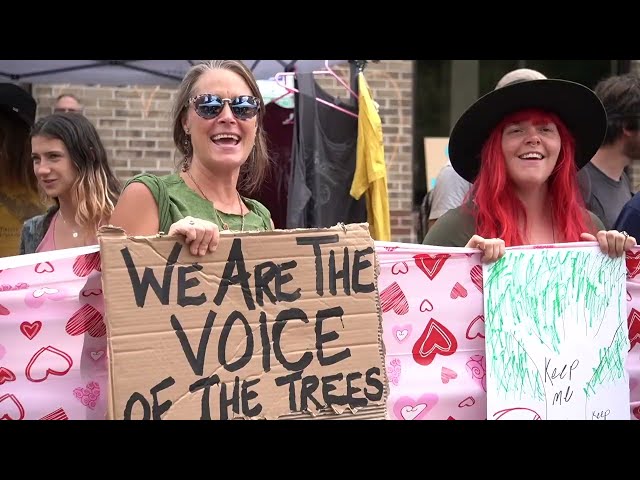
The Center for Biological Diversity recently rallied in Asheville, NC, advocating for stronger safeguards for the Pisgah-Nantahala National Forest, a biodiversity hotspot. Over 300 attendees submitted 34,000 public comments urging improved management, reflecting the message: "We love Pisgah, and we want to see more of it protected."
The Center for Biological Diversity is a 501c3 nonprofit protecting species and habitats, believing human welfare is linked to nature's diversity. We use science, law, and media to secure a future for all species. Learn more or take action via our website, Twitter, Facebook, or action alerts. For inquiries, email center@biologicaldiversity.org.

Brett Hartl, Government Affairs Director at the Center for Biological Diversity, built an artificial stream in his Arizona backyard. This vital watering hole supports wildlife like mountain lions, bobcats, bears, and deer, especially as drought and development reduce natural water sources. A video captures a mountain lion drinking from the stream.
The Center for Biological Diversity is a 501c3 nonprofit dedicated to protecting species and their habitats. Through science, law, and creative media, they work to secure a future where wild animals and plants thrive, recognizing the deep link between human welfare and nature's diversity.
Explore their work and take action: [Website](https://www.biologicaldiversity.org/), [Twitter](https://twitter.com/CenterForBioDiv), [Facebook](https://www.facebook.com/CenterforBioDiv/), [Instagram](https://www.instagram.com/centerforbiodiv/), [TikTok](https://www.tiktok.com/@centerforbiodiv/), [Action Alerts](https://www.biologicaldiversity.org/action/alerts/). For inquiries, email center@biologicaldiversity.org.

Increased human activity, urban sprawl, and development are pushing endangered species like mountain lions, panthers, and manatees to the brink. Recent incidents, including the death of California mountain lion P-78 from rat poison and vehicle impact, and 14 Florida panther fatalities this year due to collisions, underscore this critical threat.
The Center is a leader in establishing wildlife connectivity across the nation. Join our expert staff in California and Florida to discuss our vital work in protecting wildlife where they live.

The deaths of mountain lion P-78 from rat poison and a vehicle strike, alongside 14 Florida panthers killed by vehicles this year, underscore a critical threat. Endangered species like mountain lions, panthers, and manatees are pushed to the brink by increased human activity, habitat loss, urban sprawl, and a lack of wildlife corridors.
The Center for Biological Diversity leads efforts to establish vital wildlife connectivity across the nation. Join our expert staff in California and Florida to learn more about our work protecting wildlife where they live.

Growing concern about beef's environmental impact faces political backlash, driving new climate commitments. Food and climate experts will discuss the climate science of beef, exploring effective solutions, regenerative practices, and emission reduction strategies. They will also examine carbon markets, consumer awareness, and how cultural factors influence the debate.
Renowned experts Dr. Jonathan Foley (Project Drawdown), Dr. Matthew Hayek (NYU), and Dr. Silvia Secchi (University of Iowa) will lead this discussion. Sign up for our Food X e-newsletter: https://www.biologicaldiversity.org/programs/population_and_sustainability/food-x/

This powerful song, created and performed by young people living along the Gila River in Southwest New Mexico, serves as a heartfelt plea to protect this vital waterway for future generations.
Listen to their message. Then, visit www.wildgilariver.org to learn more about the campaign to designate the Gila a Wild & Scenic River.

Students from the Brophy Native American Club ran 227 miles through diverse terrain to pray and protest for the protection of Oak Flat in Arizona's Tonto National Forest.
Oak Flat, a sacred Apache site, faces destruction by a copper mine. Its preservation depends on Senator Mark Kelly supporting the Save Oak Flat Act.
For more information, visit: biologicaldiversity.org/campaigns/oak_flat/index.htm

In October 1972, following public action, Congress passed the Marine Mammal Protection Act (MMPA). The first federal law of its kind, it aimed to protect marine mammals in U.S. waters, allowing them to recover and thrive.
The MMPA has since saved countless marine mammals from unregulated hunting and pollution. Yet, significant threats like climate change, fishing gear entanglement, and oil and gas development persist, underscoring the need for continued implementation and enforcement.
Join us through October to celebrate the MMPA's 50th anniversary. We'll share stories, host events, and provide opportunities for action. Help spread awareness by sharing our video with #MMPA50.

Researchers from the Loango Chimpanzee Project have reported a novel discovery in Loango National Park, Gabon. They observed chimpanzees catching flying insects and applying them to their own wounds, as well as the wounds of other chimps.
This behavior may qualify as a form of self-medication. It could potentially prevent or reduce the harmful effects of pathogens and toxins, offering new insights into primate healing practices.

Students are passionately advocating for the Healthy Future Students and Earth Act.
Listen as they share compelling reasons why this legislation is vital for a sustainable future.
After hearing their perspectives, contact your congressional representatives and urge them to support this critical bill.

Red wolves, like those found in North Carolina’s Alligator River National Wildlife Refuge, are among the world's most endangered carnivores. Relentlessly persecuted, they were declared extinct in the wild in 1980 after the last few were moved to a captive-breeding program.
Today, only eight wild red wolves are known to roam eastern North Carolina. The Center is actively working to save this critically endangered species. Learn more about red wolves here.
Environmental Scientist and Advocate
What EarthSayers stands for
Discover Diverse Voices on EarthSayers
Unlike algorithm-driven platforms that push you into a content bubble, we ensure you hear a variety of perspectives from scientists, activists, Indigenous leaders, business innovators, and everyday citizens working toward sustainability.
EarthSayers CINEMA
Watch, learn and lead—sustainability starts with you.
The Thinking Game | Full documentary | Tribeca Film Festival official selection
“The Thinking Game” is the inside story of DeepMind's groundbreaking AI research, culminating in the Nobel Prize-winning AlphaFold breakthrough. Filmed over five years by the award-winning team behind "AlphaGo," this documentary explores co-founder Demis Hassabis's lifelong pursuit of artificial general intelligence and the rigorous scientific journey from mastering strategy games to solving the 50-year-old protein folding problem.
Following its world premiere at the Tribeca Festival, "The Thinking Game" is now available to watch for free. For those interested in hosting a screening for a classroom, community, or workplace, visit: rocofilms.com/films/the-thinking-game/.


